What happens when the people meant to protect participants are too stretched, too quiet, or too comfortable to act?
I keep coming back to the same point: the NDIS does not become safer just because the right words appear in policy documents. It becomes safer when people on the ground are willing to name what is going wrong, push back on poor practice, and keep advocating even when the paperwork is exhausting and the system feels painfully slow.
Luckily, it is not all doom and gloom. There are encouraging signs that participant experiences are breaking through into the public conversation. Positive media visibility matters — especially when it helps shine a light on people who are too often overlooked. When disability issues are covered with seriousness and humanity, they stop being hidden in the margins. That matters, because public visibility creates pressure, and pressure can create change.

The Cracks in the System: Hospitals, Back Pay, and SDA Bottlenecks
Some of the biggest problems in the NDIS are not dramatic on paper — but they are brutal in real life.
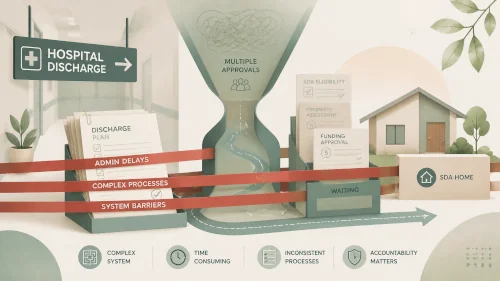
- Hospital-to-SIL transitions: One of the most distressing pressure points is when a participant is medically ready to leave hospital but cannot get back into their Supported Independent Living home smoothly. Delays between hospitals, housing, providers, and decision-makers can leave someone stuck in the wrong environment for far too long. That is not just inefficient. It is destabilising, disorienting, and sometimes downright unsafe.
- The waiting game on back payments: Delayed NDIA back payments can hit participants and providers hard. When legitimate payments drag on, people are left chasing money that should already have been resolved, and that financial pressure spills into everyday life fast.
- SDA and home and living bottlenecks: Administrative changes and home and living approval delays continue to create confusion for Specialist Disability Accommodation providers and for participants trying to secure stable arrangements. When approvals stall, everything else stalls with them — tenancy decisions, support planning, provider confidence, and basic peace of mind.
These are not minor admin issues. They are human stress points. And when the system is clogged with red tape, participant safety depends even more on whether providers and coordinators are acting with competence, honesty, and urgency.
The NDIS Code of Conduct: A Standard We Need to Champion Together
Here is the blunt truth: the NDIS Code of Conduct is not optional in spirit, even if some providers treat it like a box-ticking exercise.
The Code is not there to make organisations sound respectable. It is a safety mechanism for participants. It sets the baseline for how people should be treated and how providers should behave when they hold real power in someone else’s life. In plain English, it exists to help protect people from exploitation, neglect, dishonesty, intimidation, and sloppy or harmful practice.
When the broader system is under strain, the Code matters even more. It becomes the line that says: no, you do not get to charge fees you did not disclose to participants; no, you do not get to hide the fact your workers are not trained properly. Providers, coordinators, and advocates all need to keep that standard front and centre if trust is going to mean anything.

While many providers genuinely do the right thing, support coordinators still come across situations that appear to breach the Code of Conduct and/or the NDIS Practice Standards. Missed shifts, non-existent transparency around fees and charges, restrictive practices without authorisation, financial overreach, overservicing, and patterns of poor communication are all still happening. These issues are real, and they need calm, consistent follow-through.
That is where systemic reporting matters. If the same kinds of breaches keep surfacing across participants, settings, or provider types, we cannot keep pretending each one is an isolated glitch. At some point, it becomes a pattern — and patterns need to be reported, documented, and escalated properly.
So, what separates one coordinator from another? Time and willingness.
“I Have the Time to Report Them. And I Won’t Stop.”
Many support coordinators are caught in high-volume, high-churn business models: carrying 50, 60, or 70 participants at a time. And frankly, that model can become dangerous. When you are drowning in a massive caseload, you do not always have the mental bandwidth or the hours in the day to draft detailed reports, gather evidence properly, follow up on concerns, and escalate matters to the Commission. You triage, you put out fires, and sometimes the deeper safeguarding work gets squeezed out.
This is precisely why I refuse to run a bloated caseload. At Steady Guide, I cap my caseload at 20 participants.
Why? Because low caseloads are not a branding gimmick. They are a protection mechanism. They give me the time to notice patterns, chase missing information, question dodgy conduct, document provider failures properly, and report breaches to the regulator when needed. And my promise to you is simple: I won’t stop reporting them.
From Small Compromises to Multi-Million-Dollar Fraud
Some people worry that reporting smaller breaches can feel too harsh, especially when the whole sector is under pressure. Believe me, providers are under a lot of pressure.
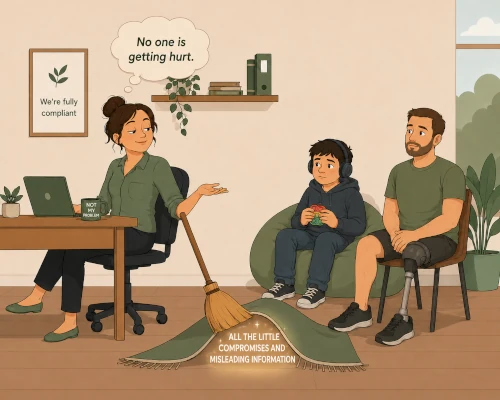
But this is exactly why early accountability matters. Recently, a Darwin public servant and associates were charged with defrauding the NDIS and people living with disability. They claimed millions of dollars inappropriately. Multi-million-dollar fraud schemes do not appear out of thin air overnight. They often start small: a minor rule bend here, soliciting an extra half an hour in shift duration from participants, a culture of casual non-compliance that gradually grows bolder because no one stepped in early on.
That is why respectful, timely reporting matters. It is not about punishing people for the sake of it. It is about protecting participants, protecting public trust, and stopping harmful patterns before they become entrenched.
Whose Job Is It?
If a provider regularly breaches the NDIS Code of Conduct and demonstrates through a pattern of behaviour that they are likely to do it again, what should happen?
It must be reported to the NDIS Quality and Safeguards Commission.
It is not our job as support coordinators to act as private investigators or detectives. It is, however, our job to safeguard participants.
When concerns are serious or repeated, staying silent does not help anyone. Safeguarding means taking clear, appropriate action. It means backing the safety, dignity, and autonomy of the person in front of you — and trusting the proper regulator to do its job.
Finding Steady Ground Together
Navigating the NDIS should not feel like walking through administrative dead-ends and avoidable confusion. You deserve a support coordinator who has the time, the expertise, and the moral backbone to stand beside you — and stand up for you when it matters.
If you are looking for calm, professional, and thoughtful support coordination in the Toowoomba area, let’s have a conversation. You do not have to navigate the grey areas alone.
- Phone or text: Reach out directly to discuss your plan.
- In-person: Book a face-to-face meeting in our sensory-friendly Toowoomba office.
- Schedule a chat: You can pick a time that suits you via my online booking calendar.
Let’s hold the line together.