Why Neuroaffirming NDIS Support Will Change the Way You View Your Plan Goals
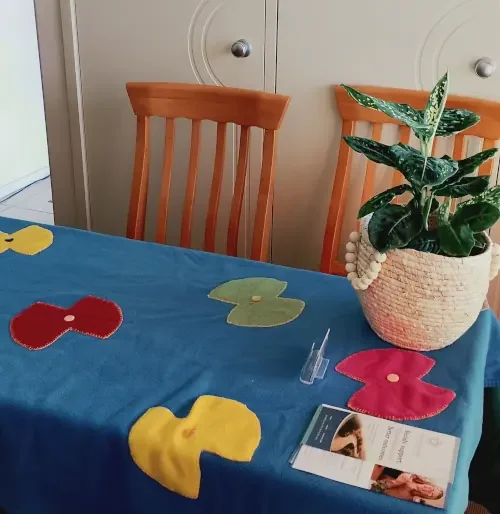
I ensure my meeting place is warm yet professional.
If you’ve spent anytime navigating the NDIS, you’ll know how impersonal it can feel. That’s not how I do things at Steady Guide.
Let's be blunt: if your NDIS support only works for people who can speak clearly, quickly, and on demand, it's not good support.
You can have a plan, goals, and a neat little list of providers — and still end up exhausted, unheard, and stuck doing the emotional labour of translating yourself to a system that should already know better.
For many neurodivergent people in Toowoomba — those of us with ADHD, Autism, or other brain differences — the standard approach to disability support can feel wrong in your bones. And that problem gets sharper, not smaller, for individuals who are non-verbal or who can't reliably communicate their needs in spoken words. Too often, the system talks around them instead of listening to them — through behaviour, body language, communication devices, routines, and the people who know them best.
So here's the real question: what if your NDIS plan wasn't about forcing you into a neurotypical box? What if it was about building a life that actually fits you — including communication that happens in ways beyond speech?
That is the heart of neuroaffirming NDIS support. It's not a trendy label. It's a fundamental shift in perspective — from obsessing over "deficits" to recognising humanity, autonomy, and real-world needs. As a Support Coordinator here in Toowoomba, I've seen firsthand how this approach doesn't just tidy up a plan. It changes lives — especially for participants whose needs are constantly missed because they are not speaking them out loud.
What Does "Neuroaffirming" Actually Mean?
In the old-school medical model, neurodivergence was treated like a problem to manage. Too often, the goal was "compliance" — or teaching you to "mask" well enough that everyone else felt comfortable.
That approach does damage. Quiet damage, sometimes — but damage all the same.
Neuroaffirming support flips that script. It starts from a simple truth: Autism, ADHD, and other neurodivergences are natural variations of the human brain, not defects to be scrubbed out or hidden away.
When I work with participants at Steady Guide, neuroaffirming practice means:
- Respecting your authentic self: I'm not asking you to stop stimming, perform eye contact, or make yourself smaller to put someone else at ease. Your comfort matters.
- Respecting all communication: Spoken words are only one way to communicate. I pay attention to AAC, gestures, facial expressions, behaviour, regulation patterns, and trusted supporters who can help interpret what matters to you.
- Strengths over "fixes": I look at what you're already good at and build from there, instead of obsessing over what the system says is "wrong" with you.
- Changing the environment, not the person: If a noisy office makes it hard for you to think, I'm not going to "train" you to tolerate distress. I'll find a quieter space or use noise-cancelling tools.

Shifting the Goalposts: A New Way to View Your Plan
Most NDIS plans are packed with goals like "increase social participation" or "improve daily living skills". But when you look at those goals through a neuroaffirming lens, the whole picture changes.
1. Social Participation vs. Social Connection
Standard NDIS plan coordination might push you towards a local sports club to "be social". But if you're Autistic and large groups leave you wrung out, that goal can feel less like support and more like punishment. A neuroaffirming approach asks a better question — how do you actually want to connect? Maybe it's a small Dungeons & Dragons group, an online community, or simply having enough energy to meet one friend for coffee once a month.
2. Capacity Building on Your Terms
We talk about "capacity building" as though it's some tidy little ladder — one rung after another, always climbing. Real life doesn't work like that. Capacity is fluid. Some days you have the "spoons" to manage a complicated schedule; some days you absolutely don't. Neuroaffirming NDIS plan coordination builds systems that support you on your worst days, not just your best ones.
For participants who are non-verbal, that also means building communication supports that actually work in real life — not just on paper, not just in funding reports, and not just when everyone's calm. In plain English, I'm asking questions like: does this person have a reliable way to say "yes", "no", "stop", "I'm in pain", or "I need a break"? If the answer is no, that is not a minor oversight. It's urgent.
3. Outsourcing the "Executive Function Tax"
The NDIS is a mountain of paperwork and phone calls. For many of my participants, this "executive function tax" is the biggest barrier to using their plan. My role as your Support Coordinator is to do the heavy lifting — the scheduling, the follow-ups, and the vetting of providers — so you can put your energy into actually living your life.
The Power of Trauma-Informed Support Coordination
You can't talk about neurodiversity without talking about trauma. Too many neurodivergent people have spent years being misunderstood by doctors, teachers, services, and past support workers. That kind of history doesn't just disappear because someone books an NDIS meeting. It comes into the room with you — and if support isn't careful, respectful, and grounded, the process can feel unsafe fast.
Trauma-informed support coordination is about being a steady guide through that. It means:
- Safety first: We move at your pace. If you need to stop a meeting because you're overwhelmed, we stop. No interrogation. No pushing through for the sake of appearances.
- Trust and transparency: I'll always give you the skinny on how the system works — no hidden agendas, no gatekeeping, no pretending the process is simpler than it is.
- Empowerment: You are the expert on your own life. My job is to advocate fiercely for what you need, based on your lived experience.
- Protecting non-verbal communication: If a participant can't easily tell strangers what's wrong, I slow the process down and look closely at patterns, behaviour, environment, and input from trusted supporters. A red flag — and I mean a serious one — is any provider who treats distress as "non-compliance" before asking what the person may be trying to communicate.
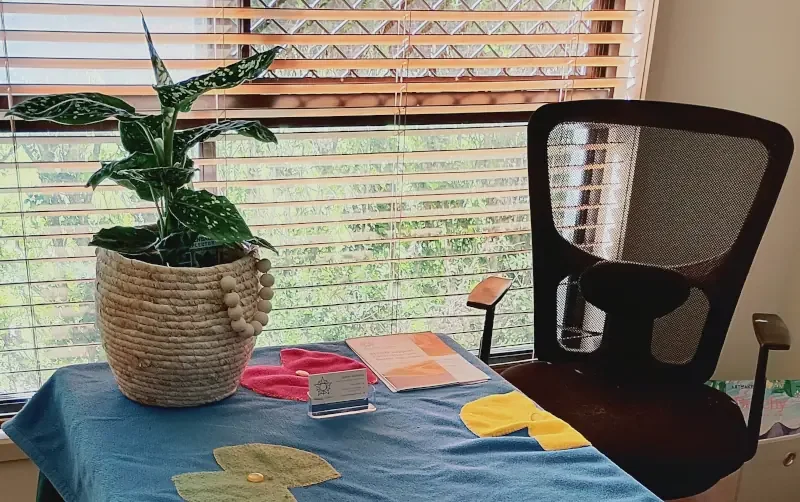
A safe space where we can talk privately.
Why Local Toowoomba Support Matters
I'm a proud Toowoomba resident, and I believe being physically present makes a real difference. When you work with a local NDIS support coordinator in Toowoomba, you're not just another name sitting in a database somewhere in Sydney or Melbourne.
The Steady Guide Difference:
- A Sensory-Friendly Sanctuary: My Toowoomba office is designed with you in mind. It's quiet, the lighting is soft, and it's a safe-to-be-you zone.
- Low-Caseload Model: Most coordinators at large agencies manage 40, 50, even 60 participants. That's not a badge of honour — it's a warning sign. I cap my caseload at 20. That means I have the time and energy to actually know you, your family, and your goals.
- Lived and Professional Experience: With degrees in psychology and writing, plus years of experience as a Local Area Coordinator (LAC) and an informal carer, I bring both book smarts and heart smarts to the table.

These are NOT toys. I keep a box of full of sensory tools to assist in managing anxiety when talking about intensely personal things. Granted, I did have fun making this homemade stress ball.
Interviewing a New Coordinator? Ask These 3 Questions:
If you're looking for a new partner in your NDIS journey, put them in the hot seat. Seriously. You are allowed to ask hard questions — you should ask hard questions. Here are three that matter:
- "How do you support participants who experience sensory overload during meetings?"
Red flag: If they say "we just try to push through it." - "What is your current caseload?"
Red flag: If it's over 40, they likely won't have the capacity for deep advocacy. - "Can you explain your approach to neuroaffirming practice in plain English?"
Red flag: If they hide behind corporate jargon instead of explaining the actual heart of their philosophy.
Ready for a Different Kind of Support?
Navigating the NDIS shouldn't feel like a battle. But for a lot of people, it does — especially when your needs are misunderstood, dismissed, or translated badly by the people who are supposed to help.
Whether you need help finding the right providers, understanding your new plan, or figuring out better supports for someone who is non-verbal and can't easily communicate their needs, I'm here.
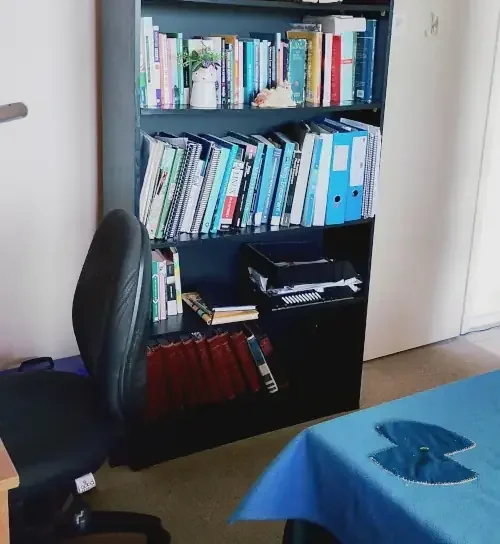
Professional support that acknowledges your needs.
Let's connect:
- Text or Call: 0424 766 144
- Book a Private Chat: Use my calendar to organise a quiet, one-on-one conversation.
- See Me at the Markets: Look for the Steady Guide banner at local Toowoomba markets.
You don't have to do this alone. Let's turn that NDIS fog into a clearer path forward.