Why Regional Queensland Families Need Local Advocacy – Easy Read Guide
Written by Jenny Mathers | Support Coordinator and Carer Advocate | Published 15 September 2026
What is in this guide
1. Long distances and travel costs in regional Queensland
Living in regional Queensland means travel can be long and expensive.
In towns like Toowoomba, Tara, Chinchilla, and Miles, therapists often have to travel far to visit you.
Uncoordinated travel can waste your NDIS money.
If providers do not share travel, one trip can take away funding meant for your therapy. We strictly oppose providers who put their profit before participant needs.
We help share travel costs across local families.
We arrange travel blocks so clinicians visit several people on the same day.
💡 Jenny’s Tip: Local support helps your NDIS funding go further. You get more therapy hours when travel is managed properly.
2. Why reports must be written by real people
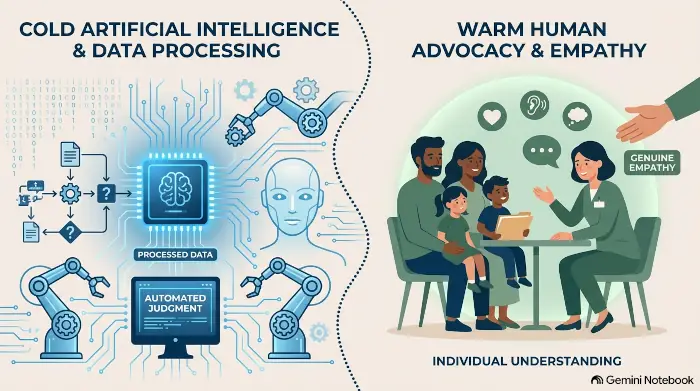
Your reports should be written by a real human professional.
We do not use computer programs to write reports or case notes about your life or health needs. Every report comes from a real human heart and mind.
Your private information is kept safe.
Putting health details into computer tools can risk your privacy. We never put your information into artificial intelligence models, even if de-identified, because software could eventually identify you. Read the Australian Privacy Principles guidelines [External Link – Opens in new window].
Preventing computer mistakes and “hallucinations”.
Computer programs can make up wrong facts or fake diagnoses. NDIS plans must be built on genuine human observation, not computer guesses.
3. Respecting local communities and ways of life
First Nations Community Connection
We listen to Elders and local community leaders to make sure support respects Country, culture, and family kinship.
Farming and Mining Schedules
We plan meetings around busy harvest times, farming work, and mining shift rosters so you are not left out.
4. How to get travel funding in your NDIS plan
Show that therapists have long drives.
NDIS planners do not always add travel money automatically. You will need to show proof that local therapists have waitlists.
Ask for in-person support when video calls are not enough.
If video calls do not work for your child or support needs, we help you ask for funding so therapists can visit in person.
5. Building a strong community support network
Families work together in regional towns.
When local families, school leaders, and health nurses share information, it is easier to solve local support gaps together. Read more about Social Network Analysis in the SNAP Advocacy Toolkit [External Link – Opens in new window].
6. Our promise to you at Steady Guide
Jenny Mathers has over 40 years of personal carer experience.
Steady Guide only supports up to 20 participants at one time. This means you always get dedicated, personal attention. You can book a zero-pressure chat with Jenny [External Link – Opens in new window] anytime.
Words that are hard to understand
Advocacy: Speaking up and helping you get fair support and choices.
Thin Market: A regional town or area where there are not many local therapists or support services available.
Travel Blocks: Booking several appointments in the same town on the same day so travel fees are shared.
Modified Monash Model (MMM): An official government rating system that shows how rural or remote a town is.
Social Network Analysis (SNA): Mapping out who in your local community helps and supports your family.
1 thought on “Local Advocacy for Regional Queensland: Why Place Based Support Matters Easy Read”
Comments are closed.